

Fiscal Lab Notes is the official Substack page for the Fiscal Lab on Capitol Hill. You can check out all our work and analyses at fiscallab.org.
Last month, the Fiscal Lab launched “CBO 101,” its first educational seminar for Capitol Hill staffers. Participants who complete this three-part series will gain an understanding of (1) the Congressional Budget Office’s (CBO) organizational structure; (2) the mechanics of writing a letter to the CBO; (3) the history of the US budget; and (4) how to efficiently locate government data from agencies such as the CBO and the Bureau of Labor Statistics.
As we discussed in a previous newsletter, Part 1 provided an overview of CBO, the scoring process, some of the models CBO uses, and the differences between conventional and dynamic scoring.
In Part 2, which was held last Friday, Parker Sheppard reviewed basic economic concepts including GDP, the price level, and headline and core inflation. He and participants worked through an exercise to demonstrate how the government could save billions of dollars each year by basing Social Security benefits on the Chained-Consumer Price Index instead of the Consumer Price Index for Urban Wage Earners and Clerical Workers (CPI-W).
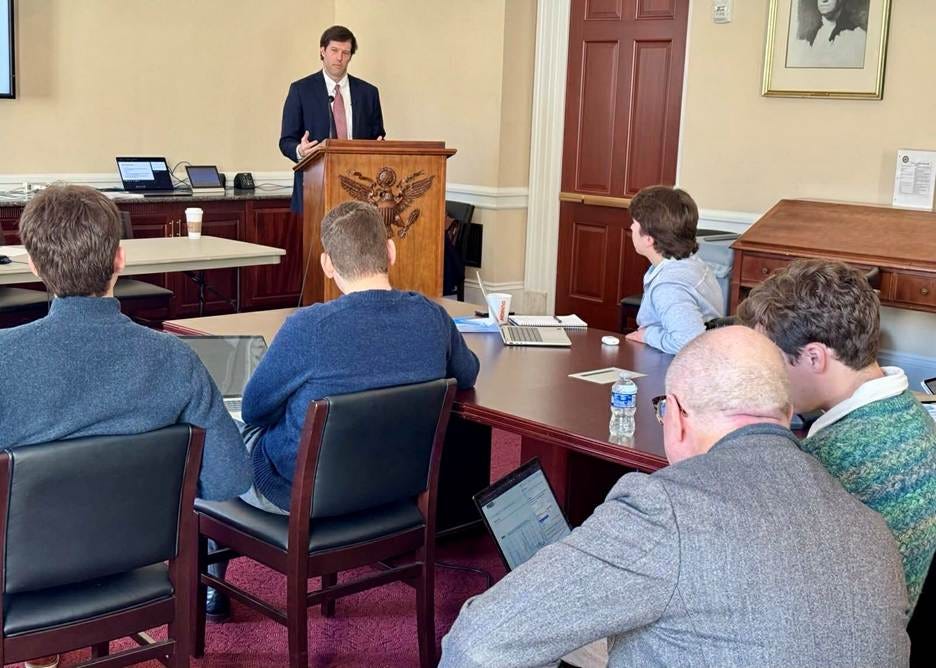
Fiscal Lab Senior Fellow Parker Sheppard instructs as seminar participants participate in a scoring exercise.
Joseph McCormack pointed the audience to our new “Reference Links” page, which provides an extensive list of useful links to government reports and data from agencies including the Congressional Budget Office, the Joint Committee on Taxation, the Bureau of Labor Statistics, the Census Bureau, and the Federal Reserve Bank of St. Louis. Bookmarking this page will help staffers easily access the data they would need to find for answering a wide swathe of budgetary and economic questions.
McCormack then had some fun by walking through a scoring exercise for a hypothetical bill, H.R. 1776, which would give free-of-charge ice cream to all Americans on July 4. Staffers had to think critically about what assumptions (what is the price of ice cream, what is the growth rate of the population, etc.) would go into such a score.
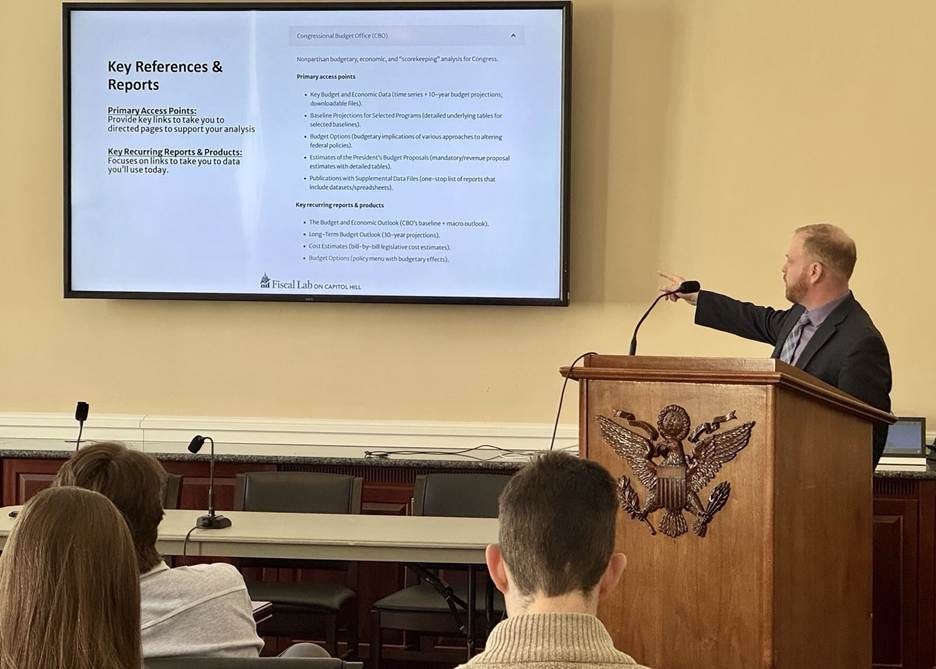
Fiscal Lab Senior Fellow Joseph McCormack
Bill Beach concluded the session by going through all the steps needed to write a letter to the CBO for a score request. A good letter to the CBO will include what type of budget score (conventional, dynamic, or both) a Member would like, the economic concepts the Member would like to be considered, and a requirement for a meeting between the CBO and the Member’s staff identifying the elements to appear in the score and the timeline for the score to be completed.
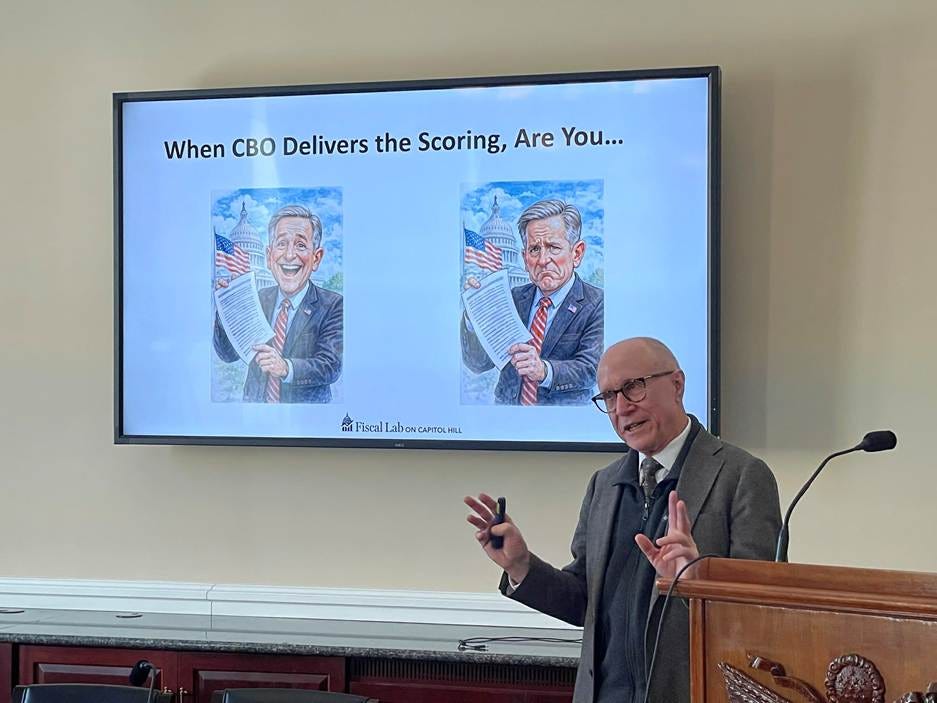
Fiscal Lab Executive Director William Beach
If you could not attend these sessions or would like to revisit them, then you are in luck! The Fiscal Lab has just created a YouTube channel where it posts its video materials.
You can find Part 1 here:
And Part 2 here:
Part 3 of CBO 101 will be held today, Friday, February 6. Fiscal Lab staff will go into greater detail about the rules and assumptions that go into CBO’s federal budget baseline projection as well as tips congressional staffers can use for creating charts on the budget or other economic concepts. Video of Part 3 will be up in the coming days!