

Fiscal Lab Notes is the official Substack page for the Fiscal Lab on Capitol Hill. You can check out all our work and analyses at fiscallab.org.
New Year’s Eve 2025 not only marked the end of a tumultuous and historic year, but also the first four months of the Fiscal Lab. Not that I’m drawing a parallel with the larger field of political and policy change, but in our own way 2025, or its last four months, was historic and tumultuous.
We launched the Lab on September 15 after working from the late Spring to secure funding, staff, and a host of other indicia of a Washington nonprofit. Our website announced our presence on that date, which we punctuated with a blitz of Hill visits organized by our Senior Fellow and Director of Strategic Outreach, Doug Branch. Those visits to House and Senate offices resulted in several projects and promises to work with the Fiscal Lab on a wide range of legislative initiatives. Note that we decided to launch over a 30-day period that we expected would contain the normal fiscal year-end drama of past years. Little did we know that our launch would coincide with one of the most dramatic cessations of governmental activity in the post–World War II era. Honestly, the government shutdown was an excellent backdrop for launching the Fiscal Lab.
No sooner had we launched, however, than Doug secured an amazing assignment: The Republican Study Committee (RSC), the largest Republican caucus in the House, asked the Lab to score over 100 provisions in what would become the House’s second reconciliation bill (or Reconciliation 2.0). Organizations far larger and well established would have found the challenge of scoring these separate pieces of legislation in six weeks daunting, to say the least.
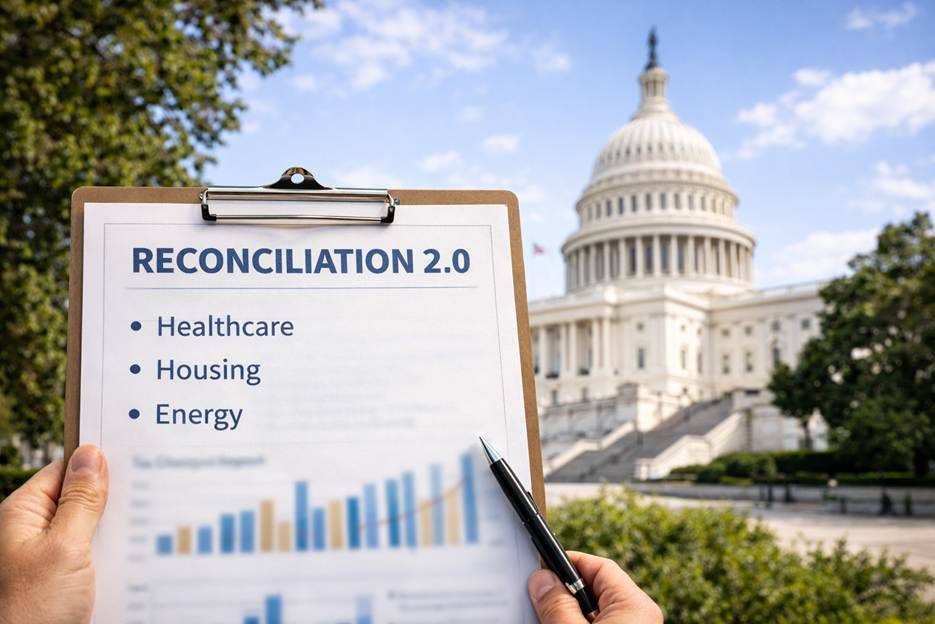
Even so, the Fiscal Lab accepted the opportunity. We did what the Lab was built to do: work closely and behind the scenes with Members and staff to refine and analyze legislation designed to walk the federal budget back from the fiscal crisis cliff. Under the direction of Joseph McCormack, one of the Lab’s Senior Economists, Patrick Horan and Bill Beach worked steadily on all 108 separate policy initiatives. Six weeks later, the lab produced 10-year scores that closely followed the scoring template of the Congressional Budget Office (CBO). These conventional scores then appeared in the RSC’s newly released publication, “Making the American Dream Affordable Again.” The Lab now is working on a dynamic scoring analysis of Reconciliation 2.0 under the direction of Parker Sheppard. That is, how would the US economy react if Congress were to enact the provisions contained in the RSC’s document of January 13.
Our legislative analysis work is only one half of our Hill initiatives. The Lab’s other major mission is Hill staff education. We believe that solving our fiscal crisis will require Members and Hill staff who are much better educated about how deficits affect the economic and financial performance of the private sector. It requires, as well, Hill staff who are better prepared to work with the Congress’s official analytical agencies: the Congressional Budget Office, the staff of the Joint Committee on Taxation, and the Congressional Research Service.
To that end, the Lab will conduct its first Hill training session starting on January 16: “CBO 101: Understanding the Baseline Budget & Economic Outlook, Scoring, and Transparency.” CBO exerts enormous influence over the pace and content of House and Senate Legislation. Unfortunately, many Members and staff do not know how best to work with CBO or evaluate the agency’s work. Thus, many opportunities for better legislation and crisper analysis are left untapped.
In so many ways, the first four months of the Lab’s life has shown the promise we envisioned when creating this organization. The elected Members of the House and Senate today certainly need more analytical support if they have any chance of taming the enormous series of annual deficits that loom so clearly without dramatic change in the nation’s policy portfolio. It is the Lab’s purpose to supply that extra analytical energy and help this and future Congresses make real progress toward a more fiscally stable future.
The Fiscal Lab at the Annual Meeting of the American Economic Association
The American Economic Association held its annual convention this year in Philadelphia. For four days, from January 2 through 5, thousands of economists from all over the world descended on the City of Brotherly Love to discuss developments in the many fields of economics and review the interplay between economics and public policy.
Bill Beach, Executive Director of the Fiscal Lab on Capitol Hill, attended the conference and appeared on two panels and one round table. Beach has been heavily involved in several work groups focused on how best to reform the US statistical system and develop new, more timely economic statistics. Two of his presentations focused on those reform efforts. The panel on “The State of Government Economic Statistics” held on the last day of the conference attracted a large audience and featured experts from the business, nonprofit, and academic sectors.
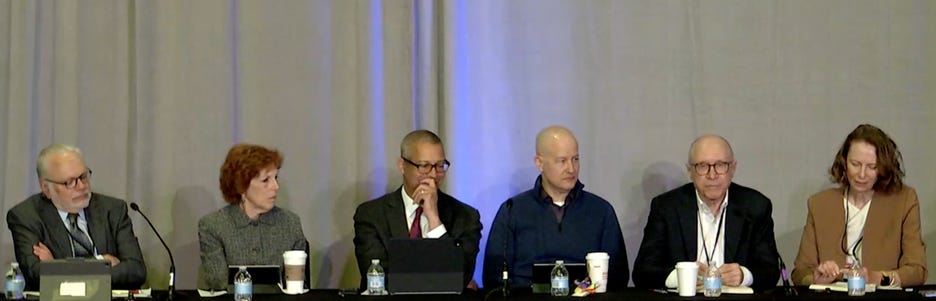
Beach also spoke on a panel that explored the current state of the US labor market. He argued that changes in the workplace are so rapid and so driven by technological and international developments that, even with the best, high-frequency statistics, we would have trouble finding and collecting data that would enable analysts to make reasonable estimates of the new tasks that are redefining existing jobs. That said, our current array of statistics fails to measure how tech and the international division of labor are affecting tasks. They fail because we lack a way of connecting changes in tasks (think how AI would change human tasks) with job change and labor productivity.
Beach made a call for developing a new task classification system that would run parallel with existing industrial and job classification systems. This new task classification system would give us a much better view of what’s happening, since most of the change workers experience is at the task level.