

Fiscal Lab Notes is the official Substack page for the Fiscal Lab on Capitol Hill. You can check out all our work and analyses at fiscallab.org.
A quiet, rather background document appeared on the web site of the Congressional Budget Office (CBO) this past week. Dr. Phillip Swagel, the director of CBO, announced that he would end his long tenure as the office’s head in early 2027. While many may have missed this important development, those of us who treat CBO as a unique and entirely special authority in Washington noted well this news.
Phill Swagel is the tenth CBO director since 1974, when the Congressional Budget and Impoundment Control Act created the agency. The office began operating the next year on February 24, 1975. Dr. Swagel began his tenure in June 2019 and was reappointed to a second term in 2023. He is only the fourth director to serve into a second term.
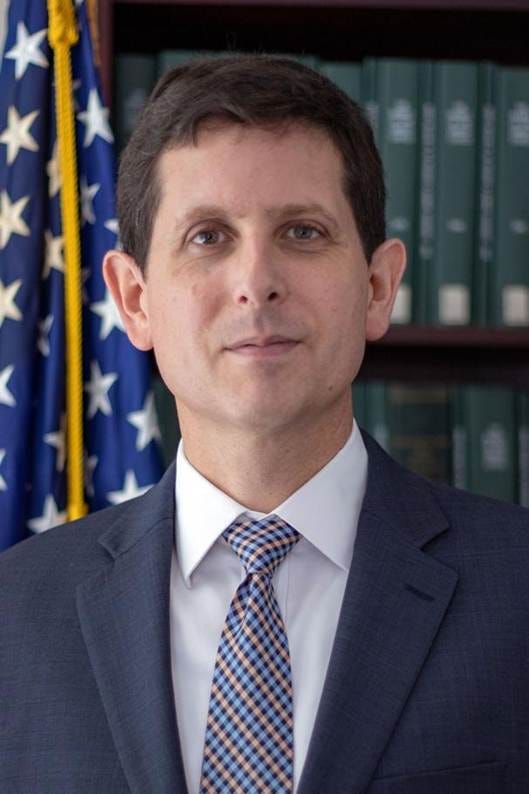
Dr. Phillip Swagel
I don’t believe, however, that he will only be remembered for that important distinction, as remarkable as it is for someone in a highly visible position in this highly partisan town. Rather, Phill’s legacy will spring from other sources: from his effective transformation of the office and his protection of its independence. Specifically, he substantially advanced the agency’s transparency, budget, and economic modeling, as well as its publications on special policy topics. Perhaps even more important, he will leave CBO (and return to the University of Maryland) as a strong, nonpartisan, professional organization.
Let me explain.
Many in this town, including me, made parts of their careers complaining about CBO. Now, some of those criticisms were entirely justified, but others were like sniping at the authoritative views of a highly effective management consulting firm: You tie your criticisms to their quality products in the not unreasonable expectation that the latter will elevate the former. Even so, you know there is more good than not in what they say.
Phill’s work added a lot of quality to CBO’s output. Take the changes to CBO’s transparency: Phill oversaw the implementation of new search tools that made it easier for policymakers to find CBO work and offered new ways of connecting CBO output through XML feeds. The office provided more of its computer code, its equations, and its interactive tools to CBO.gov users. In addition, Phill expanded the reporting of CBO forecasting performance, not only to address the legitimate concerns of critics but to challenge his own staff to improve its estimation techniques.
Recall the dates of his directorship: 2019 through 2027. It is no small matter to manage a vital public body through crisis times, but to do so during the first major pandemic of the past 100 years underscores even more Phill’s skills. He had to move CBO from an in-office operation to a virtual agency in a few days and manage it so that the vital work of legislative and budget analysis continued uninterrupted. Also recall that the COVID-19 Congress passed some of the most consequential fiscal legislation in U.S. history. All those bills required CBO scoring.
Then again, it also is worth remembering that the director almost always shields the agency from nearly constant, withering fire from across the political spectrum. That is the cost paid by those who attempt to tell the truth in an arena where the contestants frequently vent their frustrations at the fiscal referee. He will leave CBO stronger than when he arrived.
Finally, those of us at the Fiscal Lab on Capitol Hill are deeply grateful for the warm reception he gave this new organization during our first 12 months. We began our CBO-like work with a meeting in the director’s office where he invited us to work with his staff on improving the fine arts of bill scoring and budget modeling. Phill continued to support Fiscal Lab and laid, we hope, a good foundation for ongoing dialogue with CBO’s next director.
Dr. Phillip Swagel is leaving the Congressional Budget Office. That said, I have a nearly certain suspicion that he will remain firmly in the fight for sound public policies that yield sustainable fiscal outcomes. The Fiscal Lab looks forward to joining him for years to come in that struggle.